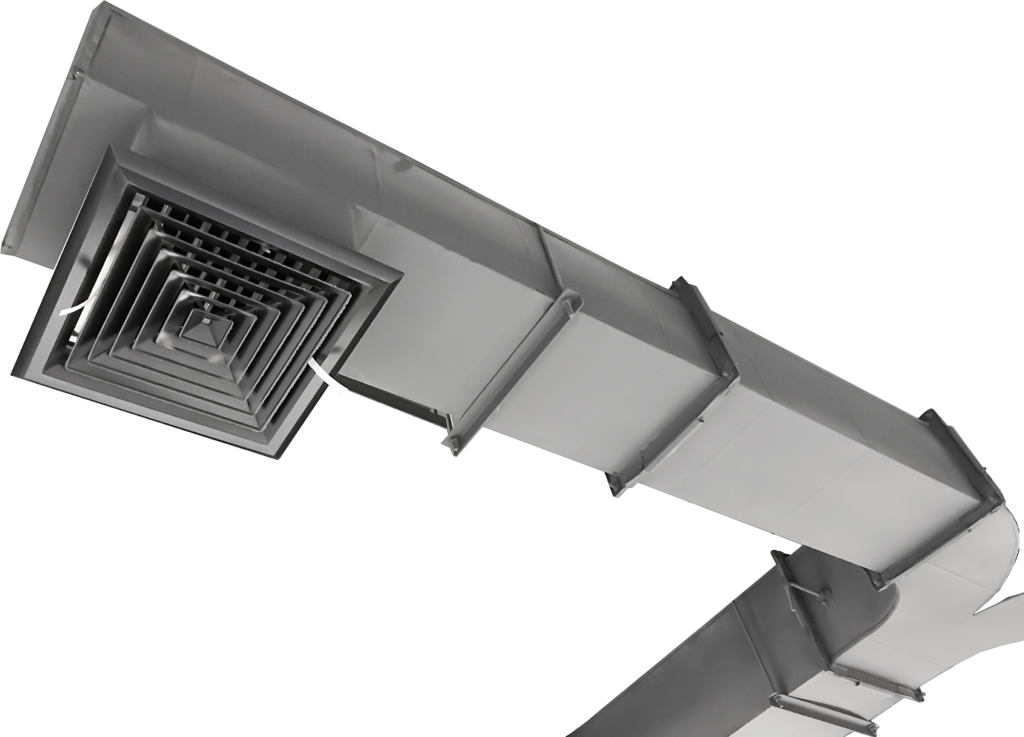
Commissioning asks a building to prove what the drawings promised. Airflows land on setpoints, spaces hold temperature, pressure relationships line up like dominos, and the people in the building do not complain. That proof relies on measurement, and measurement relies on conditions you can trust. If the ductwork is coated with drywall dust, welding slag, and a few stray coffee lids from the jobsite, none of that trust holds. Start clean, and the data behaves. Start dirty, and you will spend two weeks chasing ghosts.
I learned this the unglamorous way. A medical office fit-out looked good on paper, but the exam rooms would not hold a negative offset to the corridor. The TAB team swore the numbers were right. The BAS showed VAV damper positions that made no sense. We opened a section of return duct and found a tired layer of gypsum powder that looked like sifted flour. The dust load was adding static pressure in places we were not measuring and starving a branch behind a fire smoke damper. We brought in a commercial duct cleaning crew with proper source removal gear. Two nights later, the rooms snapped to their pressure targets, the controls tuned easily, and the escalation emails stopped. The equipment had not changed. The data path had.
Commissioning is often framed as a sequence of tests and checklists. In reality, it is an interference exercise. You remove distractions until the system tells you what it can do. Commercial duct cleaning removes one of the loudest distractions in the airside world.
What commissioning is trying to prove, and how dirt cheats the test
A good commissioning plan asks for predictable airflow, sensible static pressures, stable temperatures, and indoor air quality that matches the owner’s project requirements. It also expects that controls will respond in a linear, repeatable way. Dust, jobsite debris, and microbial growth do not simply sit there like cosmetic smudges. They rewrite the physics.
Airborne debris collects on the leading edges of turning vanes and fasteners, the roughness changes add friction losses branch by branch. Fibrous liner that got damp during construction can grow and shed, which loads filters downstream and throws particulate counts out of range. Debris that migrates to coils adds a thermal and aerodynamic tax. Tiny accumulations at smoke and fire dampers, especially around the hinges and blades, cause them to stick and mess with both safety testing and routine balancing. The building will still move air, but the cost curve bends up and the control curves flatten.
When the commissioning authority looks at a VAV damper reading 96 percent open to deliver a modest cfm, the first instinct is to blame the actuator or the flow ring. And sometimes that is right. Other times, the duct tells a different story. Pressure drop that should be 100 to 150 Pa over a section runs double. The fan ramps to compensate, power follows roughly with the cube of flow and speed, and you buy energy forever because of a decision not to clean what you cannot see. None of this shows up in a submittal binder. It shows in amperage, alarms, and comfort calls.
The timing question that changes everything
You can clean at three stages, each with pros and cons. During construction but after the duct is installed and capped, you can spot clean sections that got abused by trades. Before TAB and functional performance tests, you can do a systematic clean that sets a fair baseline. After occupancy, you can correct what got missed, especially in existing buildings commissioning.
I prefer a two step approach. Cap and protect during construction, then perform full system cleaning after start up, coil flushing, and initial filter changes, but before TAB locks in numbers. This sequence catches what construction throws at you, and it keeps the TAB crew from tuning against a moving target. Clean too early and you risk recontamination from drywall sanding or ceiling grid cutting. Clean too late and TAB gets false data, which contaminates controls tuning and airflow setpoint acceptance. There is a sweet spot in the commissioning schedule where cleaning converts chaos into clarity.
What “commercial duct cleaning” means when you are proving a system
Duct cleaning is not a guy with a shop vac and a leaf blower. For support of commissioning, it should follow a standard like NADCA ACR with methodical source removal, negative pressure containment, and HEPA filtration on discharge. Trained crews make access openings with approved doors or panels, mechanically agitate the interior with brushes or air whips, collect the loosened debris under negative pressure, and verify visually with cameras or direct inspection. They isolate zones so that one dirty trunk does not pollute a clean one when they switch fans. They swap or protect filters so coils and fans do not receive the blast of what gets dislodged.
This kind of work has a rhythm. You work from the terminal ends back to the air handling unit, or you split the system into bite sized quadrants when smoke control zones or shaft geometry force the issue. You stage equipment to avoid tripping fire alarms. You coordinate with security when negative air machines need to exhaust to the exterior at night. In hospitals, you complete an infection control risk assessment and build anterooms or soft walls where needed. In labs, you respect containment boundaries. Good cleaners live in the gray area between construction and operations and know how to disturb the fewest people at the worst hours.
Written evidence, not just a cleaner smell
Commissioning thrives on documentation. When duct cleaning supports it, you do not settle for a vague note that says “ducts cleaned.” You want before and after photos from recognizable locations, access opening logs with sizes and closure types, submittals for the HEPA filters on the negative air machines, and a map of the system that shows what got touched. You want a chain of custody for any microbial sampling, if warranted. You want to see that internal insulation was not shredded and left to shed, and that any encapsulant used was specified and actually appropriate for HVAC. You want to see that fire and smoke dampers were returned to their original positions and tagged if they failed to close or reopen.
I have found white glove tests and tape lifts produce theater without science. They tell you that someone touched a particular spot, not that the system is clean enough to behave. A better measure is a coherent package of visual verification, pressure logs from the negative air equipment, and airflow and static readings that stabilize after cleaning. You are not accrediting a cleanroom. You are removing a variable. Prove the removal in ways that align with the commissioning acceptance criteria.
TAB stops chasing its tail when ducts are clean
Balancing is a craft, even with good instruments, and a messy duct makes the craft look like guesswork. I have watched a TAB tech tweak a branch damper ten times because the downstream VAV could not hold flow. Once we cleaned a return riser that had a layer of gypsum at the bottom elbow, the VAV dropped from constant high damper percentages to a midrange that left room for the controller to work. Balancing numbers that used to drift overnight held within a percent or two across shifts. Economizers stopped hunting. Minimum outdoor air setpoints tracked, especially in mixed air units where coil face fouling and return grunge had been confusing temperature sensors.
From a numbers angle, it is common to see a few dozen Pascals of avoidable drop across a dirty run, plus coil and filter penalties from upstream debris. That does not sound like much until you map it across a fan curve. A modest decrease in static gets you a surprising margin of controllability, especially at low loads where systems tend to get twitchy. Put simply, clean ductwork buys you stability.
Edge cases you do not want to meet for the first time at 2 a.m.
Not all dirt is dirt. A fine powder from drywall behaves differently than rust flakes from old spiral or fibrous shedding from aged liner. Consider three tricky edges:
- Microbial growth in porous liner. If ductboard or internally lined duct gets wet and grows something, cleaning alone will not cure it. You might need to remove and replace sections, or clean and encapsulate with a specified product. Commissioning wants clean air, but you cannot test that into existence if the material is actively feeding spores. Coatings and sealants that change friction. Some projects call for an internal sealant after cleaning to lock down fibers. Be careful. The wrong product changes the duct roughness and shifts balancing in ways no one anticipated. If you must encapsulate, commission with that condition in mind and document the spec. Fire and smoke dampers that fail silently. It is not unusual for a cleaning crew to discover a damper wedged open by a chunk of mortar or a twisted blade from a rough delivery. Commissioning for life safety means testing those dampers. Cleaning finds and frees many, but do not assume. Test, then log and fix.
What standards actually help
NADCA ACR remains the go to procedural standard for commercial duct cleaning. It spells out scope, containment, methods, and verification in a way that holds up to risk managers. SMACNA offers guidance on duct access and construction features that make cleaning practical. ASHRAE provides the performance backdrop, both in 62.1 for ventilation and in guidance documents that link hygiene to HVAC performance. For healthcare, add FGI guidelines and the infection control measures that ride along. You do not need to cite everything in a contract, but you do want to point the cleaning vendor and the commissioning team at a common frame so the verification makes sense to everyone.
Where cleaning sits in the commissioning plan
If you sketch the commissioning timeline, duct cleaning touches prefunctional checklists, functional tests, and the issue log.
- Prefunctional. Verify that ducts were capped during construction, that filters were staged properly, that access panels are in place at coils, terminal boxes, and fire dampers. If those basics went sideways, plan on a deeper clean. Functional. Lock dates for cleaning before TAB and key control sequences. If demand control ventilation and economizer logic are on your critical path, do not run the main scripts until upstream ducts and coils are cleaned. Your trending will look smarter, and you will save days. Issue log. When balancing numbers drift or rooms will not hold pressure, add cleaning status to the list of suspects. If cleaning reveals damaged insulation or stuck dampers, track those defects like any other commissioning finding. They are not housekeeping. They are functional defects.
Commercial duct cleaning is not a line item in the commissioning plan by tradition, but it should be. It is a control on system uncertainty, no less important than calibrated sensors and verified damper orientations.
How to schedule without starting a small riot
Cleaning is intrusive if you do it wrong. It is a polite ghost if you do it right. Coordinate with building operations to run after hours, isolate noise to zones that are already empty, and vent negative air machines to the exterior if feasible. Disable or bypass the fire alarm in the affected zones with the fire life safety vendor present, then restore it with documentation. Protect finishes at access openings, label every door you cut, and patch to the right pressure class with gaskets and fasteners that match the spec. Keep a log so the next team knows where to look.
Night work costs more, but it tends to pay for itself in fewer schedule collisions and cleaner results. One high rise office project attempted daytime cleaning during fit out and lost three days to trades tripping over each other. The redo, at night, finished in 60 percent of the hours because the crew could stage equipment and move without negotiation.
Existing buildings commissioning and the trust problem
Retro commissioning often starts with complaints. Stuffy. Dusty. Headaches in the afternoon. Operators have lived with those for years and tuned around them. Cleaning is a trust builder in those settings. You pull a section of duct liner that looks like a felt hat, show the operations chief, and suddenly the whole team gets interested. Clean ducts do not solve every IAQ complaint, but they remove a common and visible irritant. They also give you firmer ground to stand on when you tell a tenant that their space is getting the airflow you promised.
A university library I worked with had persistent dust settling on stacks no matter how many times custodial polished the place. Filters were good, the outside air was reasonable, and the TAB report claimed balanced systems. We scoped the return duct from the reading rooms and found enough debris to fill three 55 gallon drums. Cleaning did not change the outside air fraction or the supply temperatures, but it cut resettled dust by a visible margin and reduced occupant complaints to a trickle. The commissioning metrics did not move much. The building felt different, which is its own kind of acceptance test.
Energy, without pretending to be a utility rebate brochure
Everyone wants a hard number. Cleaning will save X percent. The truth is messier. If dirt adds 50 to 150 Pa of avoidable static across a segment and that segment is in a main trunk that feeds a big chunk of the building, the fan will pay that tax every hour it runs. Fan power trends with the cube of flow and roughly with static under constant volume, so a small drop in system resistance can produce a noticeable decrease in motor amperage. On variable systems, you buy a margin that lets the fan loaf at a lower speed for the same delivered flow. In practice, I have seen current draw drop a few percent on supply fans after a thorough cleaning and coil wash, enough to be worth noticing on trend logs and utility bills, but not a miracle. More important than kilowatt snapshots is the way cleaning restores control authority, which keeps economizers and minimum outdoor air control honest. That saves energy by avoiding dampers clamped in awkward positions to fight invisible losses.
Filter life gets better too. If upstream ducts shed dirt into the air handler, filters load faster and drives run harder to push through them. Clean upstream, and you stretch filter change intervals by weeks or months depending on duty cycle and environment. Again, not a guarantee, but a pattern worth betting on.
Do not break the system while fixing it
Cleaning can harm a system in clumsy hands. The common failure modes are predictable. Aggressive brushing can shred internal liner and turn a one night job into a replacement project. Poorly placed access openings can nick a Visit this website structural seam or land too close to a fitting and cause a leak. Using compressed air without proper negative air containment can blow dust into occupied spaces and create a public relations mess. In sensitive spaces, you need containment vestibules, pressure monitors, and a plan for deactivating and reactivating fire alarm devices that will not earn you a visit from the fire marshal.
Good vendors show up with NADCA certified supervisors, documented equipment maintenance, and a habit of leaving systems better sealed than they found them. They bag and tag debris, they do not dump it in a janitor’s closet. They photograph before they cut, and they label after they patch. They remove test ports or plug them properly. The commissioning team should watch for that discipline and write it into the acceptance criteria.
Protect what you just cleaned
Nothing is more demoralizing than a spotless duct that turns into a dust chute during a last minute ceiling tile swap. After a cleaning that supports commissioning, protect it. Install and log new construction filters where the spec calls for them, then switch to the permanent MERV rating when the space is truly in final clean. Cap open ends with proper end caps, not duct tape and cardboard. Keep registers and diffusers bagged until punch lists stop generating dust. If someone insists on cutting core holes after cleaning, pause and reassess the schedule. Commissioning is supposed to be the last lap, not a mud run.
A few windows where cleaning punches above its weight
Some building types or conditions benefit outsized from a cleaning that supports commissioning:
- Healthcare fit outs where temporary negative pressure rooms or contractor dust control failed. Cleaning resets IAQ and helps life safety tests run cleanly. Schools that lived through multiple summer projects with ducts left open. Cleaning and coil washing often solve stubborn ventilation complaints that totaled years of work orders. Labs and makerspaces where particulates include odd metals or fine powders. A real cleaning avoids contamination that could interfere with research or maker equipment. Existing office towers that moved from low MERV to MERV 13 filtration without addressing upstream debris. Filters load fast, fans run hot, and cleaning brings the system back into balance.
If you are the commissioning authority, five moves that make duct cleaning work for you
- Write cleaning as a pre TAB prerequisite in the commissioning specification, with references to NADCA ACR and clear verification deliverables. Tie cleaning milestones to functional tests for outside air control, pressure relationships, and smoke control, so no one tests on a dirty system. Coordinate fire alarm impairments and infection control measures early, so the cleaning crew can work without tripping systems or breaking rules. Require before and after photos and access opening logs, and walk a sample of finished work in person to keep everyone honest. Trend fan power and key airflows 48 hours before and after cleaning to quantify the benefit and catch any new issues fast.
Cost, with honest caveats
Budgets for commercial duct cleaning vary wildly. The drivers are access, contamination level, internal lining, occupancy constraints, and the sheer geometry of the system. Night work costs more. Healthcare costs more because of infection control measures. Systems with few access points cost more because you will be cutting and patching. If someone quotes a price that looks like custodial services, you are not buying commissioning grade cleaning. If someone quotes you the price of new ductwork for a simple office loop, you are being upsold. The best way to scope cost is to ask for a survey with photos, a plan of attack by zone, and a list of access points to be cut and later sealed. Then tie payment to verified completion with the documentation you need for commissioning closeout.
The wiring between clean ductwork and satisfied people
You commission for performance, not for applause, but the applause is how you learn whether your building is living right. Clean ducts do not make chilled water colder or roofs thicker. They make the numbers you read line up with the air people feel. That alignment speeds tuning, lowers the noise in your trend logs, and shortens the distance between move in and normal operations. Operators inherit a system that answers to its controls. Tenants inherit a space that does not coat their desks or their throats. You inherit a report that reads like a proof instead of a mystery novel.
The trick is to move duct cleaning from the world of “nice to have” into the core logic of commissioning. Treat it like calibration. Schedule it as a dependency. Verify it like any other performance variable. When you do, you remove one of the sneakiest sources of drift and doubt in the airside chain. And you let the building show you what it can do without you having to wipe gypsum off your manometer first.